
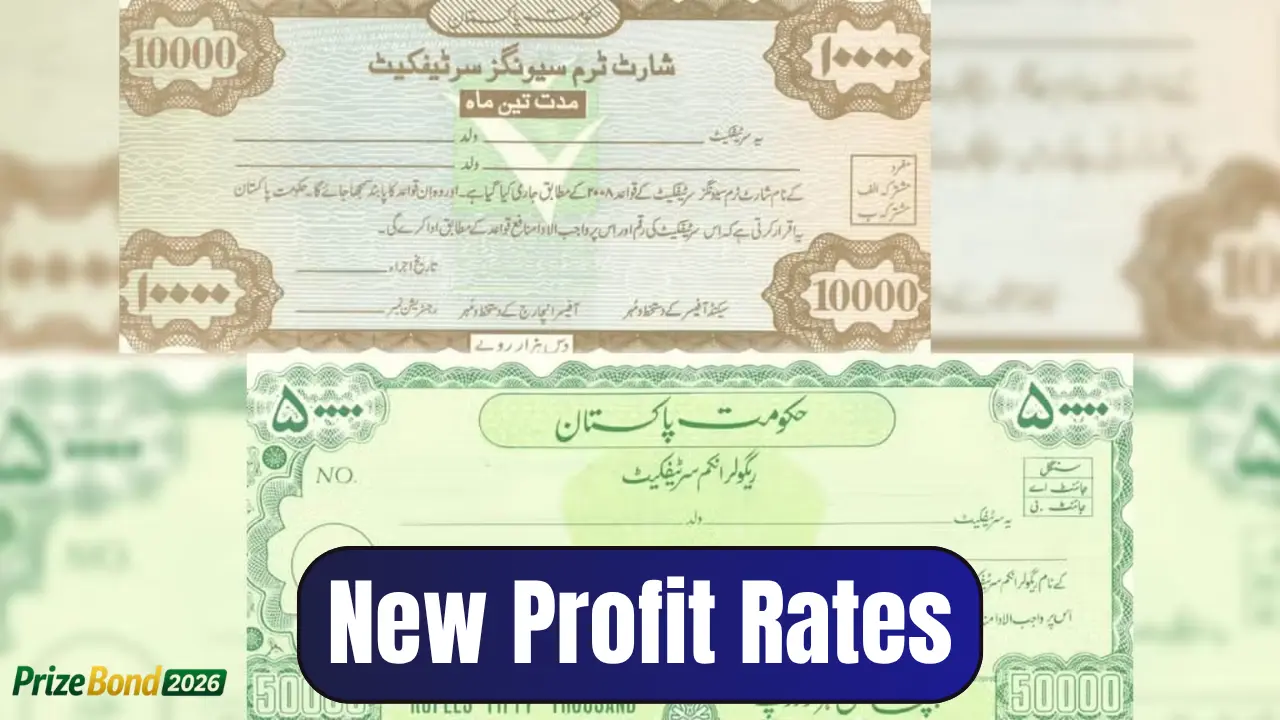
If you keep your money in National Savings certificates, there is good news. The federal government has raised profit rates on several major schemes by up to 19 basis points (BPS), and the new rates are already in effect.
According to a notification from the National Savings Department, the revised rates apply from October 1, 2026. Some of them now sit well above the State Bank of Pakistan’s benchmark lending rate of 11.5 percent, which makes them worth a closer look in a period of high inflation.
New National Savings Profit Rates at a Glance
| Scheme | Old Rate | New Rate | Change |
|---|---|---|---|
| Short Term Savings Certificates | 11.28% | 11.31% | +3 BPS |
| Pensioners Benefit Account | 12.60% | 12.72% | +12 BPS |
| Defence Savings Certificates | 11.61% | 11.80% | +19 BPS |
| Bahbood Savings Certificates | 12.60% | 12.72% | +12 BPS |
| Serwa Islamic Term Account | – | 11.33% | – |
| Serwa Islamic Saving Account | – | 11.33% | – |
A basis point is one hundredth of a percentage point, so 19 BPS equals 0.19 percent.
Which Scheme Got the Biggest Increase?
Defence Savings Certificates saw the largest jump. The rate moved up 19 BPS, from 11.61 percent to 11.8 percent. Short Term Savings Certificates got the smallest bump, just 3 BPS, taking the return to 11.31 percent.
Which Scheme Pays the Highest Return Now?
Two schemes share the top spot at 12.72 percent:
- Pensioners Benefit Account, up 12 BPS from 12.6 percent
- Bahbood Savings Certificates, up 12 BPS to 12.72 percent
Both are special-category products, so eligibility rules apply. If you or a family member may qualify, check the conditions at your nearest National Savings centre before investing.
The two Serwa Islamic options, the Term Account and the Saving Account, each offer 11.33 percent. They are the Shariah-compliant choice for investors who want to avoid conventional interest-based products.
How the New Rates Compare with the SBP Policy Rate
The central bank’s benchmark lending rate is 11.5 percent. Measured against that:
- Pensioners Benefit Account and Bahbood Certificates pay about 1.22 percentage points more.
- Defence Savings Certificates pay 0.3 percentage points more.
- Short Term Savings Certificates and the Serwa accounts pay slightly less than the policy rate.
National Savings rates generally follow movements in interest rates and broader monetary policy, so future changes in the policy rate can move these returns again.
What This Means for Savers
With inflation still high, a higher fixed-income return helps protect the real value of your savings. A few practical points before you decide:
- Match the scheme to your situation. The highest rates belong to the schemes with specific eligibility conditions.
- Compare the tenure. Short-term and long-term products suit different goals, so pick one that fits when you will need the money.
- Keep tax in mind. Profit on savings schemes can be subject to withholding tax, so look at your net return, not just the headline rate.
- Confirm the latest rate before investing. Rates can be revised again, so verify with National Savings at the time you buy.
Prize Bonds vs. Savings Certificates
Many people in Pakistan hold both. Savings certificates pay a regular profit at the announced rate, while prize bonds pay no profit and instead give you a chance at a prize in each draw. If you want steady, predictable income, certificates are the better fit. Prize bonds are better treated as a low-cost chance to win, not as an investment.
Frequently Asked Questions
When did the new National Savings rates take effect?
October 1, 2026.
How much did the rates go up?
By up to 19 basis points, depending on the scheme.
Which scheme now offers the highest profit rate?
Pensioners Benefit Account and Bahbood Savings Certificates, both at 12.72 percent.
What is the new rate on Defence Savings Certificates?
11.8 percent, up from 11.61 percent.
What is the rate on Serwa Islamic accounts?
Both the Serwa Islamic Term Account and Serwa Islamic Saving Account offer 11.33 percent.
What is the current SBP benchmark rate?
11.5 percent.
Final Word
The increase is modest, but for savers it adds up over time, especially on the 12.72 percent schemes. Review where your money is parked, compare the new rates with your needs and eligibility, and confirm the details with National Savings before you invest.